
Arrest History in Lafayette County
The Lafayette County Sheriff's Office is the main local arrest agency. It provides countywide patrol, investigations, dispatch, corrections, and records service, including within Mayo. No separate city police department, campus police, or transit police was identified. Florida Highway Patrol, FDLE, and the Florida Fish and Wildlife Conservation Commission may also arrest here, and each agency retains its own enforcement reports.
An arrest history can draw from several booking events over time, but it is not a list of convictions. The arresting agency creates its report. The Lafayette County Jail creates intake and custody records. The Clerk records any prosecution that follows. FDLE later compiles reported fingerprint-linked arrest and disposition cycles. Timing and scope explain why the sources can differ.
No Lafayette Online Booking Roster
LCSO publishes no daily arrest log, blotter, recent-booking page, or searchable inmate roster. This is a verified local limit. Do not substitute a neighboring county's system or infer what fields a Lafayette profile would show. For immediate custody information, call the jail at 386-294-4381.
The LCSO FAQ directs people to that telephone route for whether someone is held, visitation, and other inmate information. The image below documents the official phone-only path.
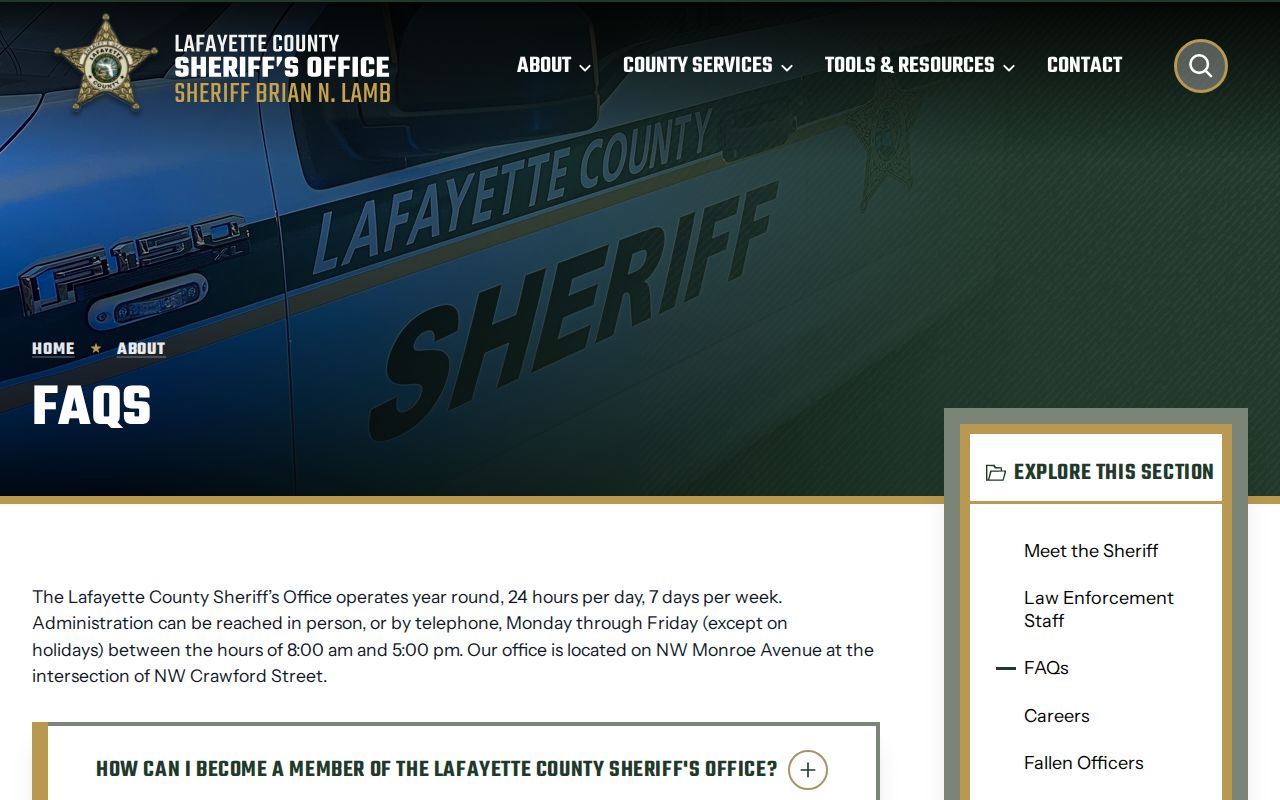
Because there is no public result page, any released booking fields must come from the actual jail record, not from a guessed roster layout.
How to Look Up Lafayette County Arrests
No single source completes a Lafayette County arrest lookup. Begin with the channel closest to the event, then move from present custody to the agency report, court filing, and statewide history. A blank result at one step does not settle the others.
- Call the Lafayette County Jail at 386-294-4381 for current custody.
- Ask the arresting agency for its arrest or incident report. Use LCSO for ordinary county and Mayo events.
- Request Lafayette jail booking material by phone, email, mail, or at the Sheriff's counter.
- Search the Clerk's OCRS after prosecution is filed, allowing for an online delay.
- Use FDLE for reported statewide history and FDC only after state prison transfer or felony supervision.
The jail's official information page provides the contact and mailing route. Its image below anchors the lookup in the county's own source.
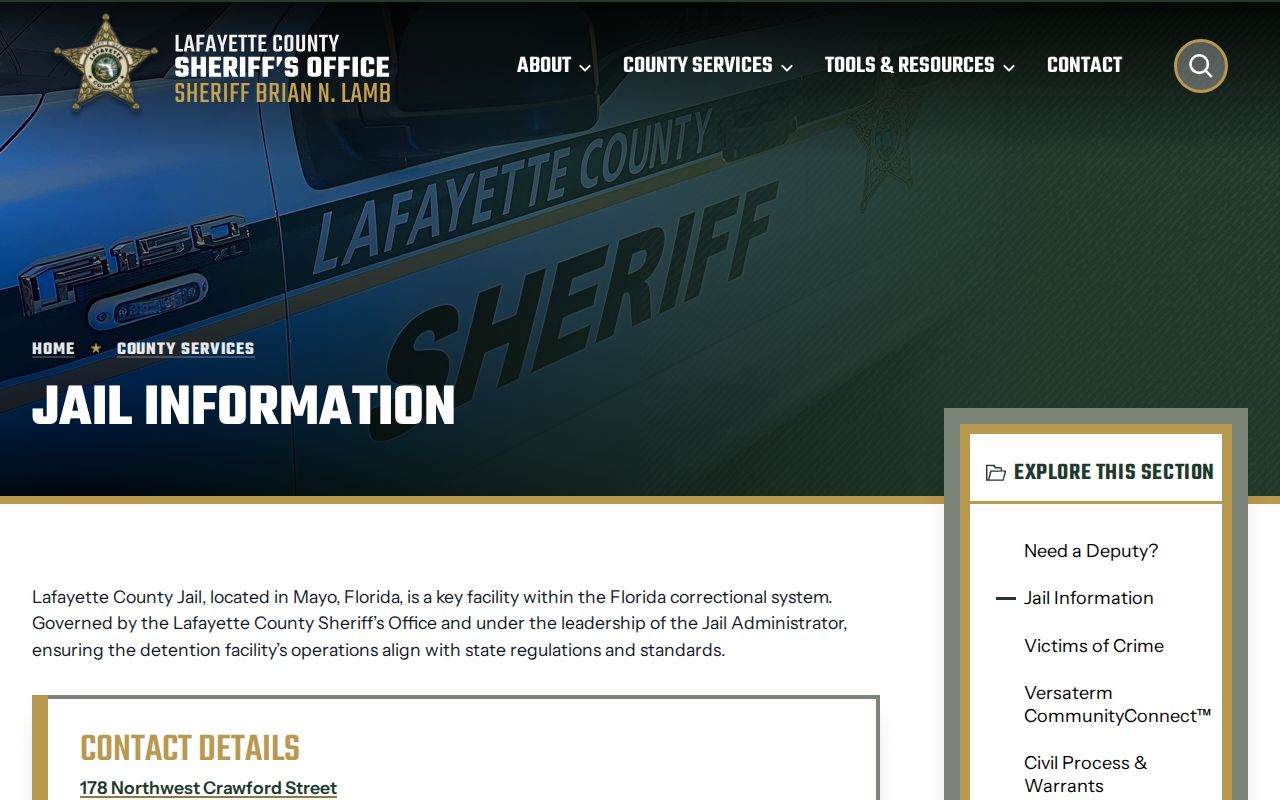
The jail operates around the clock, while the public-record counter follows its published weekday hours.
Request Lafayette Arrest and Booking Records
The Sheriff's public-records page is the main fallback when the phone answer is too limited or an older record is needed. Send requests to records@lafayetteso.org, call 386-294-1222, visit 231 NW Monroe Avenue, or mail LCSO at PO Box 227, Mayo, FL 32066. No mandatory request form, fixed turnaround, ID rule, or local fee schedule is posted.
Give enough detail to locate the event: incident or case number if known, date and time range, location, record type, relevant names, and desired format. These are useful locating details, not agency-published mandatory fields. Ask for a cost estimate. Florida permits duplication charges and reasonable special-service charges when retrieval or review requires extensive resources.
The LCSO public-records page confirms the available channels. The image below shows the official request route.
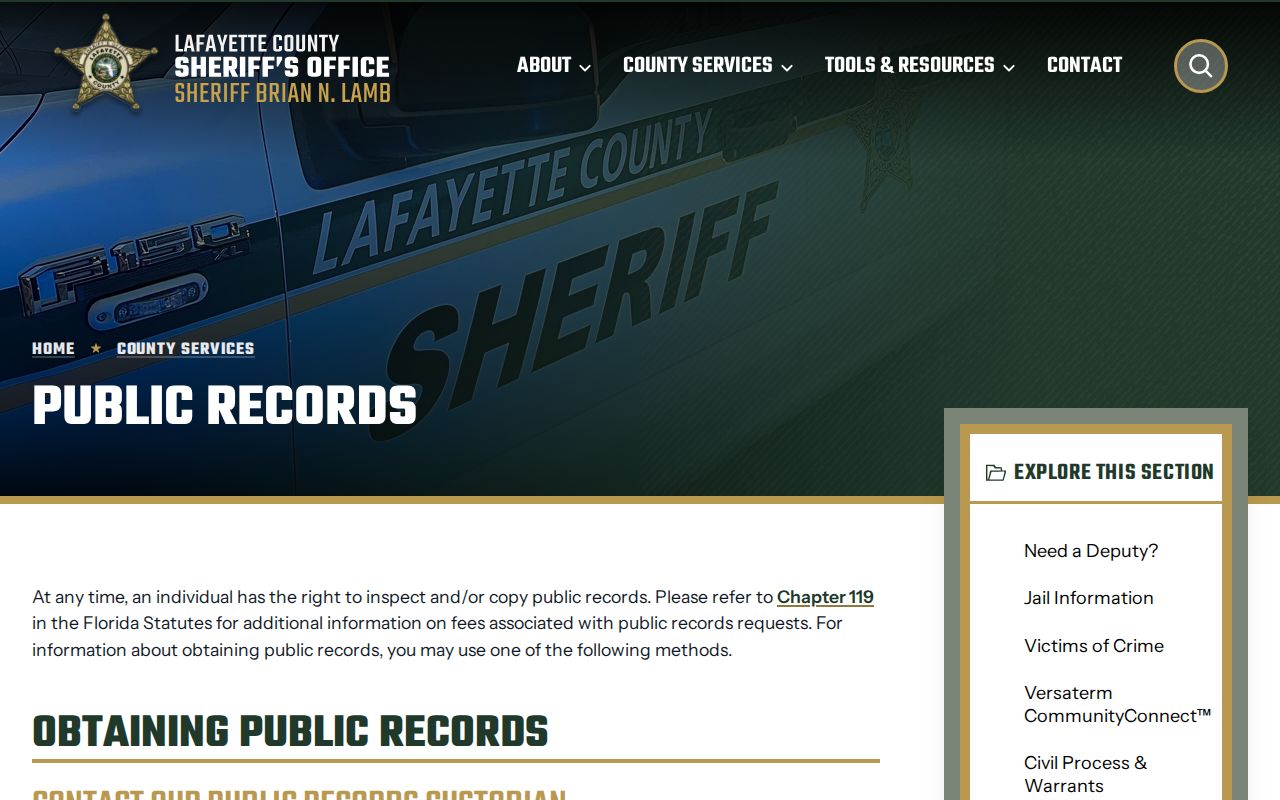
Active-investigation, juvenile, victim, personal-identifier, medical, and security information may be withheld or redacted.
LCSO Records and Administration
231 NW Monroe Avenue
Mayo, FL 32066
386-294-1222
records@lafayetteso.org
Weekdays 8 a.m.-5 p.m.; counter closed noon-1
What an Arrest Record Shows
Record contents depend on the custodian. An arresting-agency report may provide the event's date, time, place, personnel, probable-cause facts, initial alleged offenses, warrant or citation references, and evidence references. Jail intake can record identity confirmation, intake time, fingerprints, photograph, booked charges, bond or holds, property, and custody movement. Medical and classification details are commonly protected, and LCSO promises no standard public profile.
| Booking Identifier | May identify the jail intake if released; no public Lafayette field is promised. |
|---|---|
| Booking Date & Time | Marks intake, which can differ from arrest or first appearance. |
| Arresting Agency | Identifies which custodian should hold the agency report. |
| Charges | Shows allegations booked at intake, not necessarily the charges later filed. |
| Bond or Hold | May show release terms or another reason custody continues. |
| Booking Photograph | May exist in jail intake, but LCSO does not promise online publication. |
| Custody Movement | May reflect release, continued detention, or transfer, subject to disclosure limits. |
Lafayette Booking to First Appearance
A typical Florida custody path begins with the arrest report and transport. Jail staff confirm identity, conduct intake screening, take fingerprints and a photograph, inventory property, and enter charges and bond or hold information. Classification and housing follow. This sequence describes the legal and operational pattern, not a locally published checklist.
Custody flow: Arrest › Transport › Intake › Fingerprints and Photograph › Bond or Hold Entry › First Appearance › Release, Transfer, or Detention
Florida Rule of Criminal Procedure 3.130 ordinarily requires first appearance within 24 hours. The court record may then show the judicial officer, charge presented, counsel and bond findings, and the next proceeding. That file can differ from the original arrest report because prosecution review may change the charge.
Recent Arrests and Booking Logs
Lafayette County has no published booking log to browse. Call the jail first for a current custody question. For a document, request the arrest report from the arresting agency and booking material from LCSO. After the State Attorney files a charge, OCRS may supply the related court trail.
Do not treat an absent online name as a clean arrest history. Lafayette offers no roster result to test, and even counties with rosters usually display only current or recent custody. An agency report can exist before a court case appears. FDLE history may also lag while fingerprint and disposition reports move through the state system.
Channel check: Jail phone answers present custody; LCSO records answer local booking; OCRS answers filed prosecution; FDLE answers reported statewide history.
Lafayette CommunityConnect Is Not a Roster
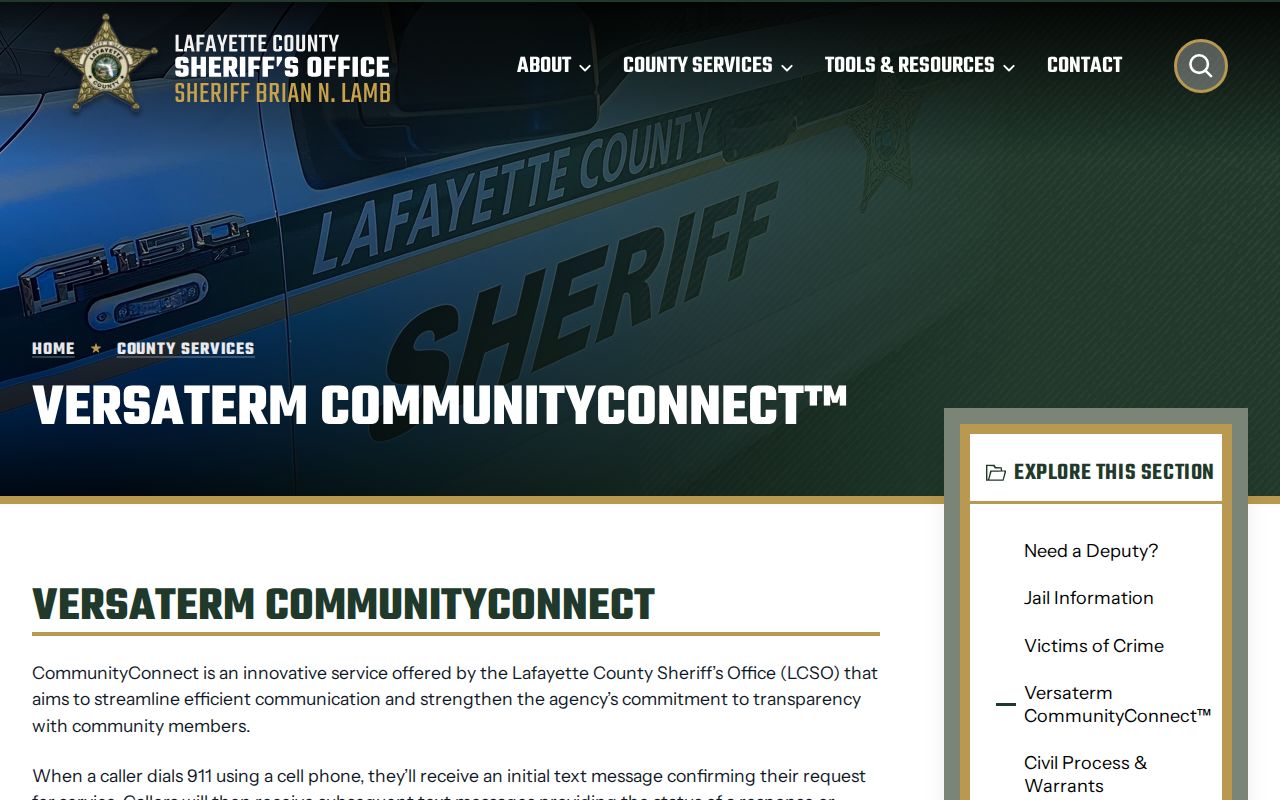
Versaterm CommunityConnect sends cellular 911 callers confirmation and later response or investigation-status texts. Messages may arrive in English or Spanish and can include a survey. The system is one-way and never asks for payment or financial information. It does not provide an arrest search, booking log, or custody confirmation.
The official CommunityConnect page explains this narrow purpose. The image below helps separate emergency-call updates from arrest-record access.
The official LCSO mobile app similarly advertises tips, crime reporting, and safety information, but its store text does not verify a jail, warrant, or arrest database.
Lafayette Arrests in State Systems
Qualifying custodial arrests send fingerprint-linked data to FDLE. Prosecutors and clerks later report dispositions. FDLE's public name search costs $24 plus a $1 card-processing fee for Instant Search; it is not certified and name matching is not biometric proof. A free fingerprint Personal Review is limited to the subject or designated attorney and provides the route to challenge errors.
FDC Offender Search belongs later in the path. It covers state prison and felony supervision, not Lafayette County Jail or county probation. A person released from the local jail or serving misdemeanor probation may never appear there. Record the search date because custody and supervision can change.
Pretrial Intervention After Lafayette Arrest
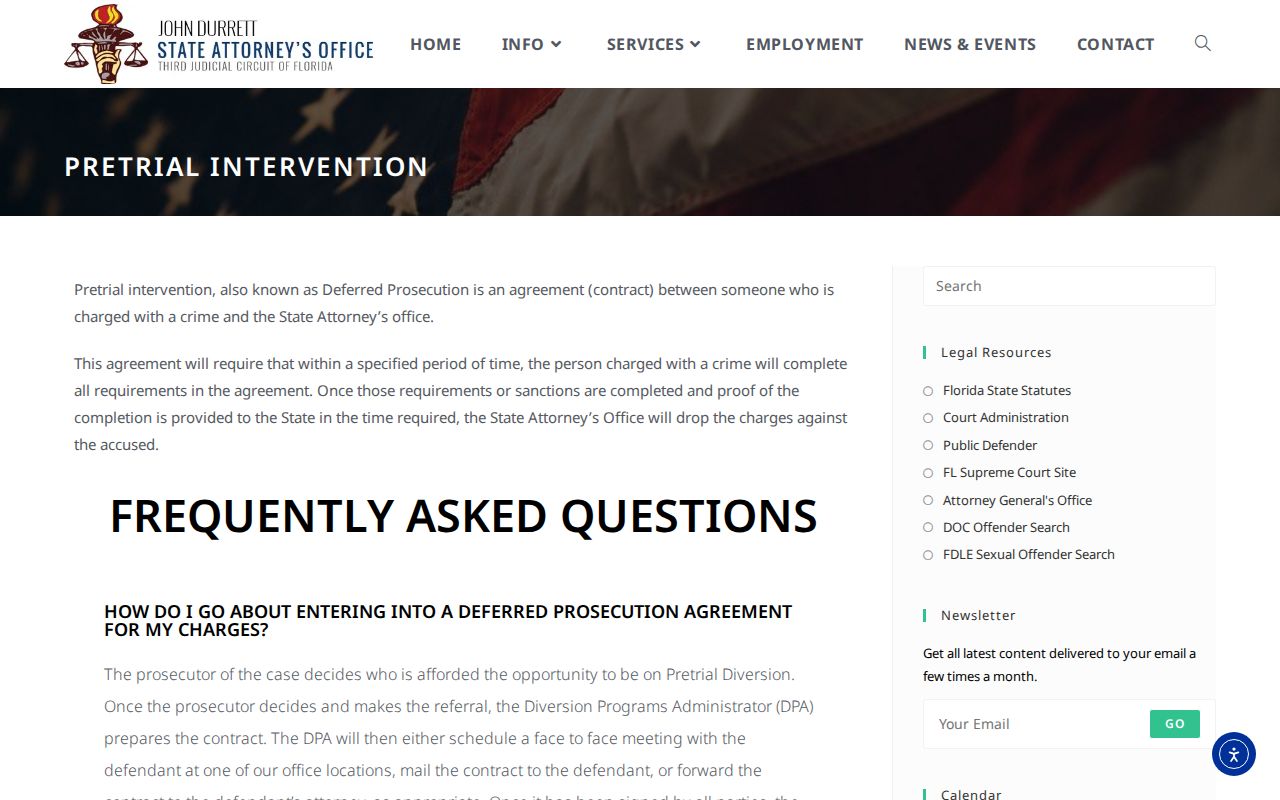
The Third Judicial Circuit State Attorney runs a prosecutor-referred Pretrial Intervention or Deferred Prosecution program. An administrator prepares the contract and coordinates signatures. Timely completion with no new violations can lead the State Attorney to drop charges, but the visible court record does not vanish automatically.
The official pretrial-intervention page outlines the regional process. The image below records that named route without suggesting that every arrested person qualifies.
Eligibility and referral are case-specific. Separate Florida sealing or expunction rules determine whether an eligible record later leaves ordinary public access.
Arrests vs Convictions
An arrest records a law-enforcement action and jail intake. A conviction records a court outcome. Lafayette County agencies create the first set, while the Clerk preserves filed charges and judgments. FDLE may link reported arrest and disposition cycles, yet a delayed or missing disposition can require correction through the reporting source or Personal Review.
| Arrest Record | Conviction Record |
|---|---|
| Created by the arresting agency and jail | Created by the court after a guilty outcome |
| Shows that arrest or booking occurred | Shows a judgment or adjudication of guilt |
| Held by LCSO, the jail, or another arresting agency | Held in the Clerk file and reported to FDLE |
| Can end in release, no filing, dismissal, or later prosecution | Can lead to sentence, appeal, sealing, or other relief |
Note: An arrest is not proof of guilt; charges may never be filed or may end in dismissal or acquittal.