
Criminal Cases in the Lafayette County Courts
Lafayette County divides criminal work by charge level. Circuit Court hears felonies and juvenile delinquency matters. County Court hears misdemeanors and criminal traffic offenses that can lead to incarceration. The Lafayette Clerk of Circuit Court and Comptroller keeps both sets of files at the county courthouse. Juvenile files are generally confidential, so their presence in the court system does not mean they are open through the public portal.
Mayo has no separate municipal criminal-court portal. A town-ordinance question may begin with Mayo's code library, but any resulting criminal case belongs in Florida's county-court structure. That distinction prevents a wasted search for a city docket that does not exist.
Lafayette Criminal Charges Choose the Court
The initial arrest label does not always determine the final court track. The State Attorney may reduce, replace, enhance, or decline a charge after reviewing the arrest report. A felony filing proceeds in Circuit Court. A filed misdemeanor or criminal-traffic charge proceeds in County Court. Search by the filed case rather than assuming the jail's first charge remained unchanged.
| Lafayette venue | Criminal work | Primary record |
|---|---|---|
| Circuit Court | Felonies and juvenile delinquency | Clerk case file; juvenile access restricted |
| County Court | Misdemeanors and criminal traffic | Clerk case file and docket |
| Sheriff or jail | Arrest, intake, and custody | Agency report or booking record, not the court file |
The Clerk's criminal-court overview explains this local jurisdiction split. The image below captures that official explanation, which helps readers select the right department before calling or visiting.
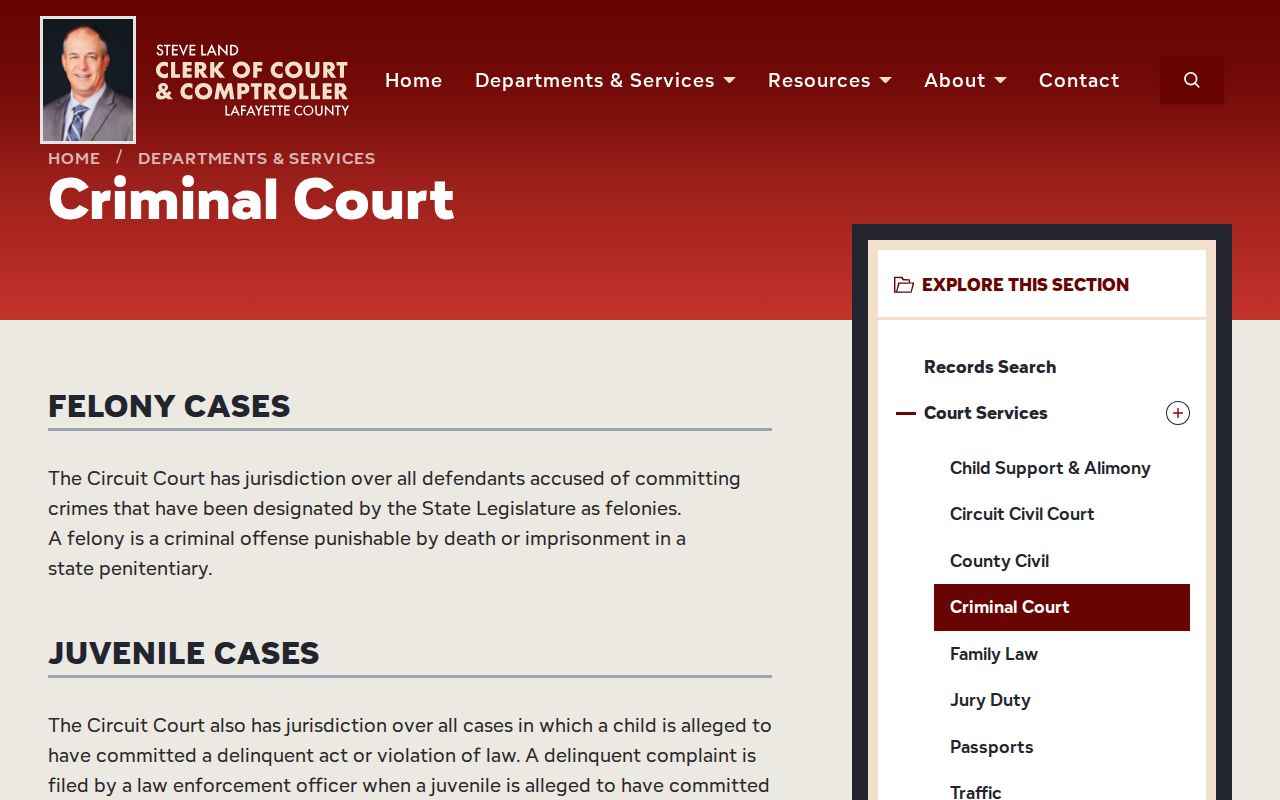
The local court page is the sound starting point when an arrest description leaves the proper venue unclear.
How to Search Case Records
The Clerk links to Civitek's Lafayette Online Court Records Search, or OCRS. Choose Public for anonymous access. The public product advertises case details, filings, and hearing information, but its post-gateway field labels were not available for responsible inspection. Follow the fields actually shown after entering Public. Do not confuse the nearby Official Records database, which mainly covers recorded instruments, with the criminal-case system.
- Open the Lafayette OCRS gateway and choose Public for anonymous access.
- Use only the search controls displayed in the live public session.
- Open the matching case details, filings, and hearing information.
- Compare the filed charge and disposition with any earlier arrest account.
- Call, mail, or visit the Clerk when a needed filing is absent or certification is required.
The Clerk's records-search entry page identifies OCRS as the court route and explains secure access. Its screen image below shows the official Lafayette entry point rather than a private data service.
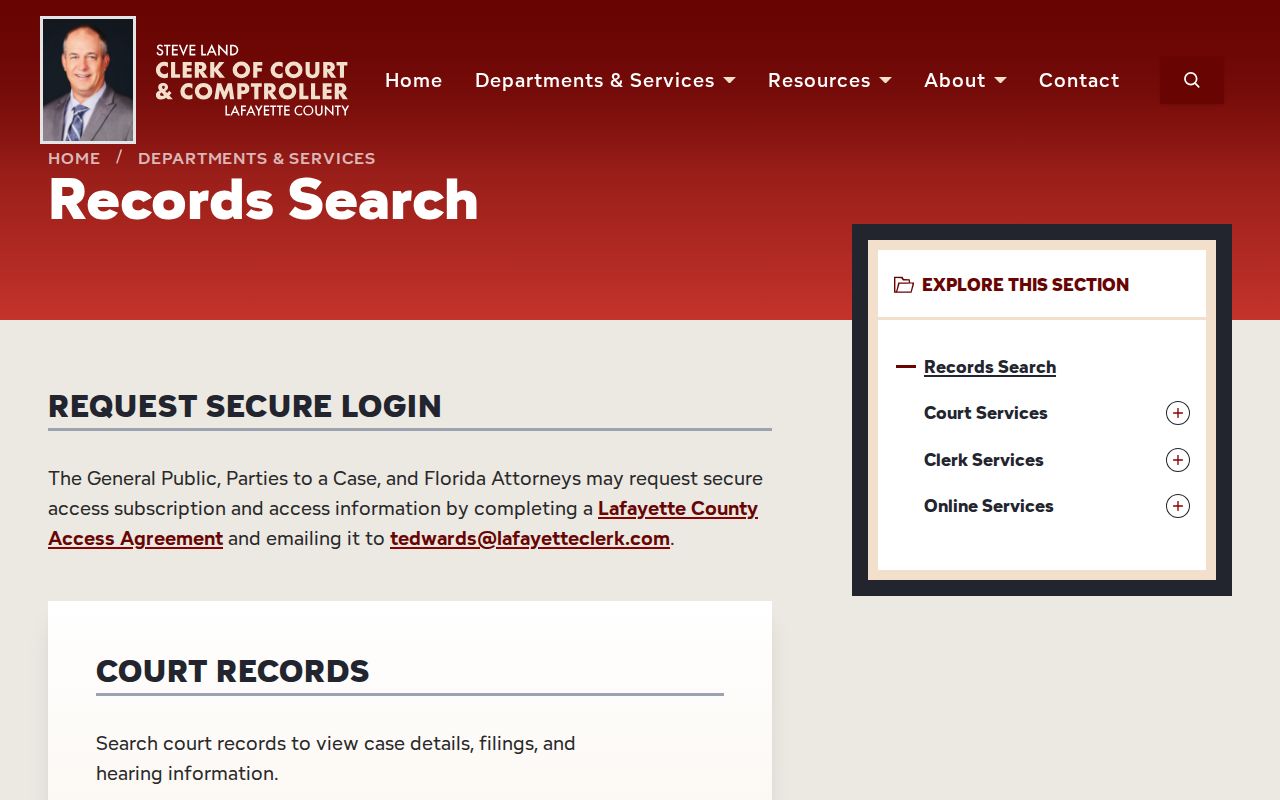
Starting at the Clerk's page also makes the courthouse and staff fallback easy to find if OCRS is unavailable.
| Field Label | Type | Required | Notes |
|---|---|---|---|
| Public | Button | No | Anonymous public case access |
| Attorney | Button/login | Credentials | Attorney access |
| Registered User | Button/login | Credentials | Approved agreement required |
| Party Access | Button/login | Credentials | Case party and PIN access |
Lafayette OCRS Access Roles
The four gateway choices are not cosmetic. Public access is anonymous. A registered user signs an agreement and remains distinct from a party or attorney. Party access incorporates registered-user access and requires a case number. An attorney supplies a Florida Bar number. A business officer, owner, or employee may seek access for an authorized named entity.
The secure-access agreement gathers contact information, role details, signature and date, plus notarization. Users must protect their login and any party PIN. The Clerk may track activity, and the agreement bars commercial resale. Role approval can expand lawful document access, but it does not override Rule 2.420 confidentiality or guarantee that a new filing appears at once.
What the Case File Shows
A Lafayette County court file follows the prosecution, not merely the arrest. It can connect a case number and court to the filed charging instrument, docket events, hearings, judgment, sentence, costs, and available documents. The docket is a dated index of what occurred. Read the disposition for each charge because one count may be dismissed while another ends in a plea or judgment.
| Case Number & Court | Identifies the court file and whether Circuit or County Court holds it. |
|---|---|
| Charging Document | Shows the complaint, information, or indictment filed in court. |
| Docket Entries | Dates filings, orders, hearings, and other case events. |
| Hearing Dates | Lists scheduled or completed proceedings when publicly available. |
| Disposition & Judgment | Records the outcome of each charge and any adjudication. |
| Sentence & Conditions | Shows court-ordered custody, supervision, costs, or other terms when public. |
Lafayette Criminal Case Outcome Terms
Outcome words can look alike while carrying different meanings. Read them at the charge level and check the related order before drawing a conclusion.
- Nolle prosequi
- The prosecutor formally chose not to continue that charge.
- Dismissed
- The court ended the charge without a conviction on that count.
- Acquittal
- A not-guilty determination followed trial.
- Withhold of adjudication
- A guilty or nolo outcome without formal adjudication, still significant under many Florida laws.
- Disposition
- The final outcome recorded for a charge or case.
A dismissal does not automatically erase the public file. Sealing or expunction requires a separate legal basis and process. The Clerk can supply the disposition needed to review eligibility with FDLE's current requirements.
Stages of a Criminal Case
A Lafayette County matter usually begins with arrest and first appearance, ordinarily within 24 hours. Prosecutor review determines whether a complaint, information, or grand-jury indictment follows. Arraignment addresses the formal charge and plea. Discovery and pretrial motions come before a negotiated plea or trial, followed by disposition and sentence. An appeal may add a later record in the appropriate appellate system.
Case flow: Charges Filed › Arraignment › Pretrial › Plea or Trial › Disposition › Sentencing
When Lafayette Filings Stay Offline
A blank OCRS view is not proof that no case or agency record exists. A filing may be new, archived, confidential, sealed, limited by access role, or temporarily unavailable during maintenance. The secure agreement expressly warns that electronic access may not be immediate.
Call the Clerk at 386-294-1600, write to PO Box 88, Mayo, FL 32066, or inspect the file at 120 West Main Street, Mayo. Ask whether the item is public, electronic, archived, or available as a plain or certified copy. Local criminal-copy fees were not published in the reviewed sources, so request the current charge before ordering.
Lafayette Clerk Criminal Desk
120 West Main Street
Mayo, FL 32066
386-294-1600
Monday-Friday, 8 a.m.-5 p.m. Eastern
Mail: PO Box 88, Mayo, FL 32066
Lafayette Criminal Case Partners
The Clerk holds the case file, while the Third Judicial Circuit State Attorney makes filing decisions and the Public Defender represents eligible accused people. Their records and roles should not be merged with the Clerk docket.
The Third Circuit State Attorney's official site identifies the regional prosecution office. The screen below helps distinguish that office from the Clerk, sheriff, and court.
The State Attorney's Live Oak office handles Lafayette matters and may provide victim-witness services and prosecution records subject to law.
The Third Circuit Public Defender office list shows the regional Live Oak location rather than a Lafayette satellite. Its image below makes that regional arrangement clear.
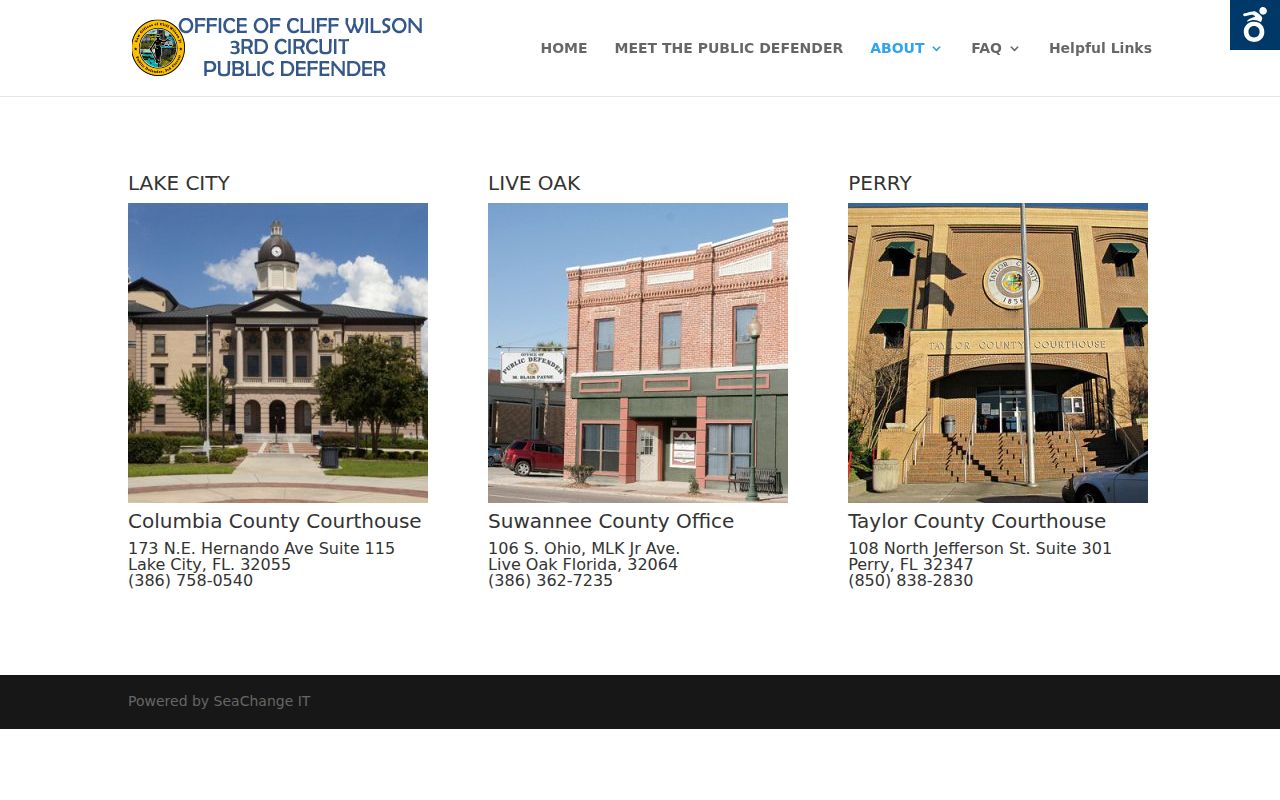
Readers should confirm current intake with the Live Oak office instead of assuming counsel records sit at the Lafayette Clerk counter.
Lafayette Court Cases and Warrants
A docket can explain the case behind a bench warrant or capias, but it is not real-time proof that the warrant remains active. County Court handles misdemeanor and criminal-traffic bench process. Circuit Court handles felony matters. LCSO recommends the FDLE FCIC wanted-person search and asks callers to verify status at 386-294-1222.
The official FCIC wanted-person form supplies a statewide public lead. The image below shows the government search fields without displaying a private person's result.
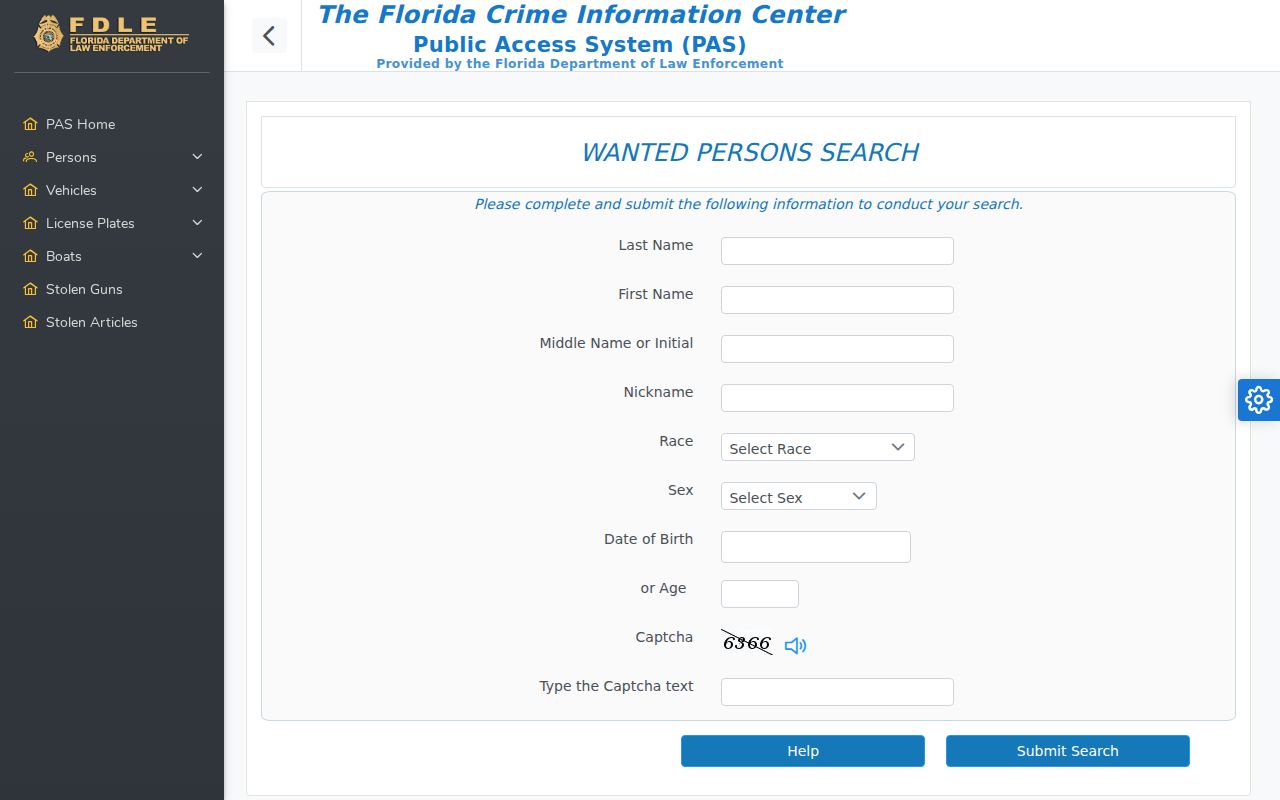
FCIC refreshes daily yet warns that entries can be stale or incomplete. Verify with LCSO or the issuing court and do not attempt to confront anyone.
Access & Restrictions
Florida Rule of General Practice and Judicial Administration 2.420 presumes judicial records are public except for enumerated confidential or exempt material. Section 119.0714 addresses protected court-file information. Juvenile cases, sealed or expunged material, victim and minor details, personal identifiers, and court-designated confidential documents may be withheld or redacted.
Remote access can be narrower than lawful counter access, and a higher OCRS role does not erase confidentiality. Ask the Clerk about the status of a missing item. Do not ask staff to disclose protected material. For the broader arrest trail, the Lafayette County arrest history route explains the separate sheriff and jail records.