
How to Check Mayo Criminal History
Mayo is Lafayette County's only incorporated municipality, but it does not operate a city police records system. Start with the record's source. The Lafayette County Sheriff's Office holds reports for its Mayo calls and arrests. The Lafayette County Jail answers current-custody questions. Filed felony, misdemeanor, and criminal-traffic cases move to the circuit or county court and the clerk's online search.
- Ask the Lafayette County Sheriff's Office for the Mayo incident or arrest report.
- Call the Lafayette County Jail when the immediate question is whether someone is currently held.
- Search the clerk's OCRS gateway after the State Attorney files a case.
- Use FCIC for a statewide warrant lead, then verify it with LCSO.
- Use FDLE for a reported Florida history or a free fingerprint review of your own record.
These channels answer different questions. A blank clerk search does not prove that no Mayo agency report exists, and a report does not prove that prosecutors filed the same charge.
Mayo's Countywide Sheriff Arrangement
The Lafayette County Sheriff's Office provides law enforcement for both Mayo and the rest of the county. Official sources did not identify a separate Mayo Police Department, records unit, report portal, or holding facility. The county budget's Town of Mayo law-enforcement revenue supports that countywide arrangement. A request should name the Mayo location, event date, people involved, and any known report number so LCSO can locate the right file.
Mayo residents use the same sheriff request routes as the rest of Lafayette County, while town administrative records stay with the town clerk. Keeping those custodians separate is vital. A town meeting record will not contain an arrest narrative, and a sheriff report is not a town ordinance file. The office that created a record is usually the best first contact for questions or corrections.
Reports may contain event facts, responding personnel, an agency narrative, initial alleged offenses, warrant or citation references, and property or evidence references. Release remains subject to Florida exemptions. Active investigations, juvenile information, victim details, and personal identifiers can be withheld or redacted.
The Mayo Police Department
The absence of a city portal is a key fact, not a missing link. Send Mayo police-report requests to LCSO by phone at 386-294-1222, email at records@lafayetteso.org, at the counter at 231 NW Monroe Avenue, or by mail to PO Box 227, Mayo, Florida 32066. Florida public-record requests do not need magic wording or a special form.
The agency has not posted a base copy fee or fixed turnaround for Mayo reports. Do not assume another county's price or schedule. A clear request reduces search work, while a broad request may require discussion of scope and any special service cost. For nonemergency dispatch, use 386-294-1301. Emergencies belong with 911.
Arrests and Bookings in Mayo
A Mayo arrest by LCSO moves to the Lafayette County Jail at 178 NW Crawford Street. No public local roster, recent-booking log, or standardized inmate profile was found. Call 386-294-4381 for current custody, visitation, and other inmate information. Request releasable booking material through the sheriff when a phone answer does not supply the needed record.
Other agencies keep their own enforcement reports. A Florida Highway Patrol, FDLE, or Florida Fish and Wildlife Conservation Commission arrest in Mayo should be requested from that arresting agency. The jail still creates intake material for a qualifying local booking, while the clerk creates a separate court file only if a prosecution is filed.
Call After a Mayo Arrest
The direct telephone chain matters because Mayo lacks a city jail page and Lafayette County lacks an online roster. First call the jail for present custody. If the person is not there, ask whether a release or transfer can be confirmed through releasable records. Next check OCRS for a filed prosecution. A filing can lag behind an arrest, and the clerk's secure-access agreement warns that filed documents may not appear online at once.
For later state custody or felony supervision, use the Florida Department of Corrections Offender Search. It does not cover county jail or county probation. Its DC Number is not a Mayo report number, booking number, or court case number.
Mayo Municipal Court Records
No separate Mayo Municipal Court or city case portal appears in the official inventory. Ordinance violations that become judicial cases use Florida's county-court structure. Lafayette County Court handles misdemeanors and criminal traffic that can lead to incarceration. Lafayette Circuit Court handles felonies and juvenile delinquency, though juvenile files are generally confidential.
| Court name | Lafayette County Court or Circuit Court, based on the filed case type. |
|---|---|
| Case types heard | Misdemeanors and criminal traffic in County Court; felonies and juvenile delinquency in Circuit Court. |
| Case lookup | Lafayette OCRS Public gateway, then the clerk counter, phone, or mail fallback. |
| What the file shows | Case details, filings, hearings, charges, pleas, docket events, disposition, and sentence when public and available. |
| Copies and fees | Ask the clerk for the current cost; no verified Mayo-specific schedule exists. |
The Official Records database beside the court search is mainly for recorded instruments such as deeds and liens. It is not Mayo's criminal-case database.
Mayo Ordinances Are Not Dockets
The Mayo Municode library publishes the town's codified legislation, including material codified through Ordinance 2023-002 dated December 11, 2023. It helps a reader identify town rules. It does not show an arrest, defendant, charge, hearing, warrant status, or case outcome.
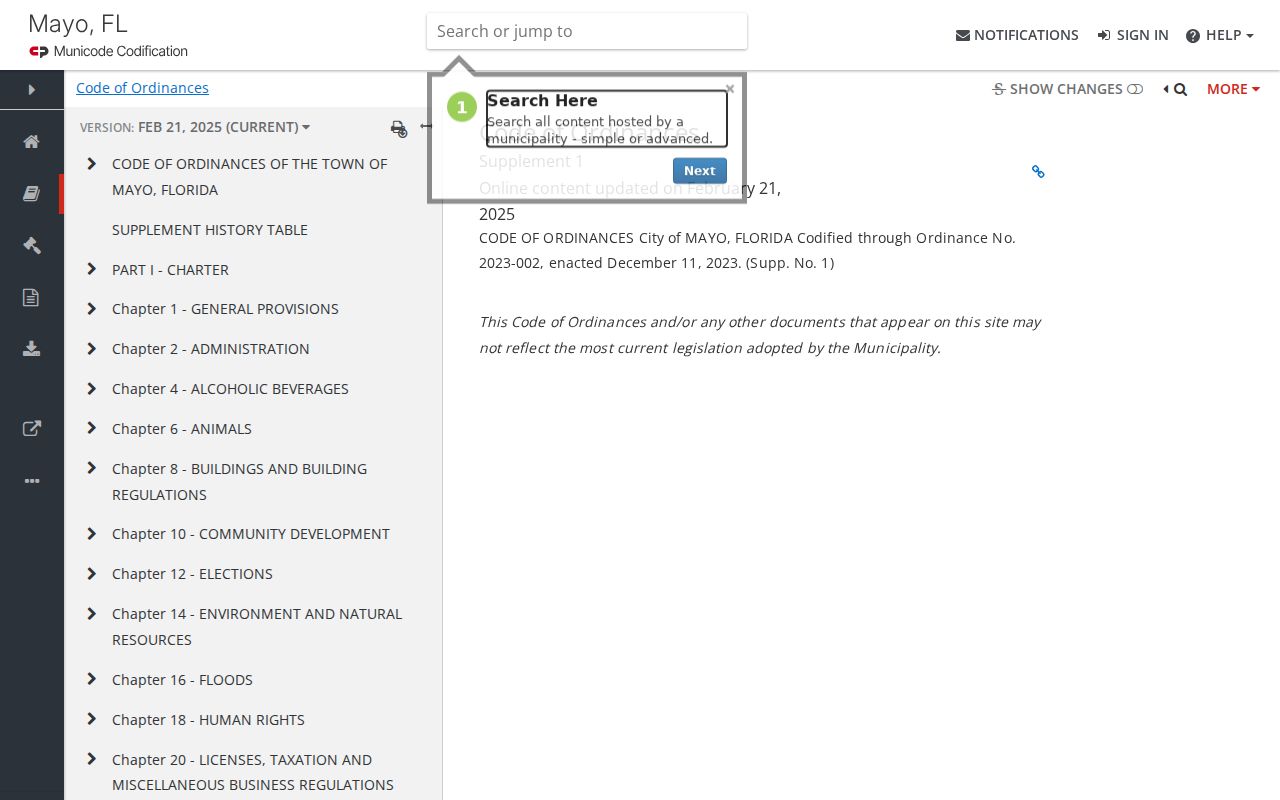
The library is therefore a law source, while an actual Mayo criminal or ordinance case belongs with the Lafayette clerk and courts.
Where Mayo Records End Up
A Mayo event can produce records in several offices. LCSO creates the incident or arrest report. The jail creates intake and custody records. The State Attorney decides what charge to prosecute. The clerk opens the court case, and the court produces hearings, judgment, sentence, and financial entries. Final reportable dispositions then flow to FDLE.
Record flow: Lafayette County Sheriff's Office in Mayo › Lafayette County or Circuit Court › Florida Department of Law Enforcement CJIS
Timing, fingerprint requirements, charge changes, restricted files, or delayed reporting can make the sources differ. For the larger county process, the Lafayette County criminal history overview explains how the records complement each other.
Mayo Sheriff App Limits
The official sheriff app advertises crime tips, reporting, public-safety information, and agency news. The store descriptions do not verify an inmate, warrant, arrest, or criminal-history database. Mayo residents should not treat the app as a substitute for the direct jail, records, FCIC, OCRS, or FDLE channels.
The official Android listing shows the available mobile presentation.
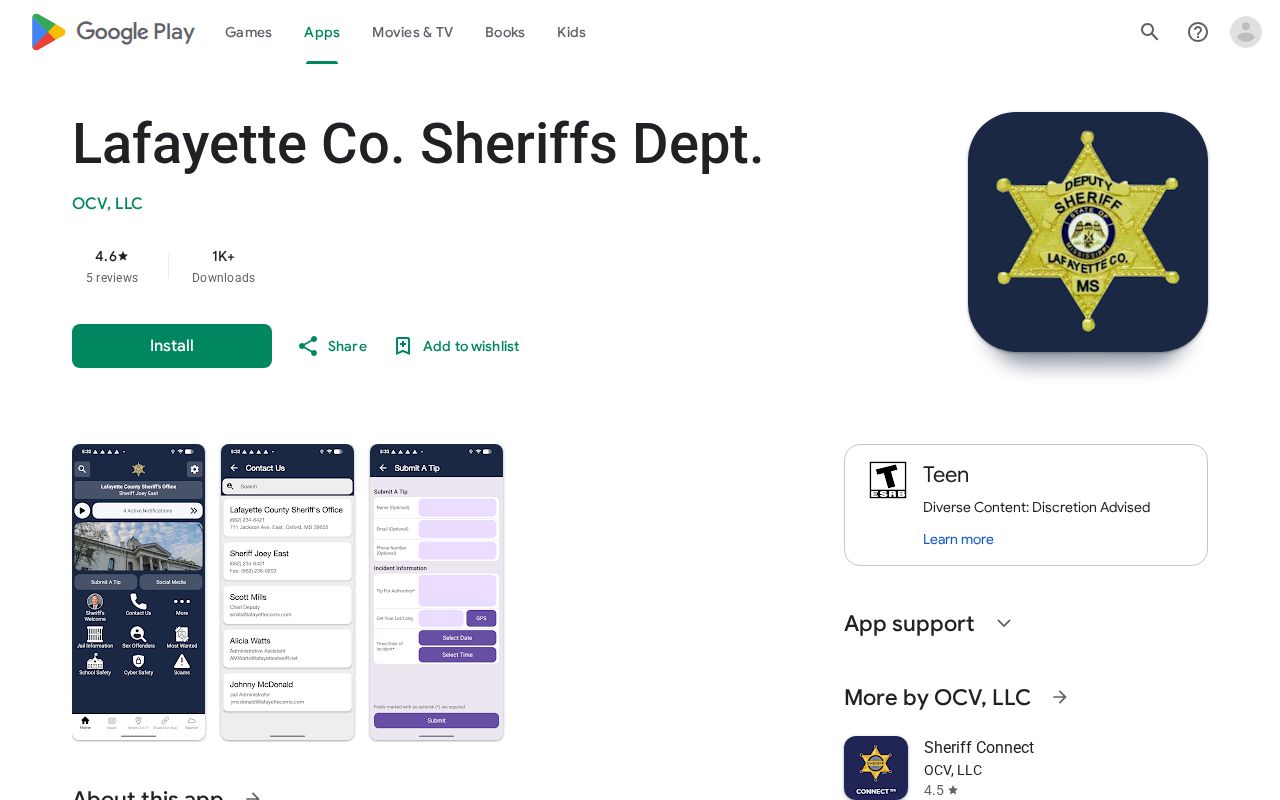
The listing confirms a local information tool for Mayo, while the direct official systems remain the documented record-search route.
Apple users can review the official iOS listing.
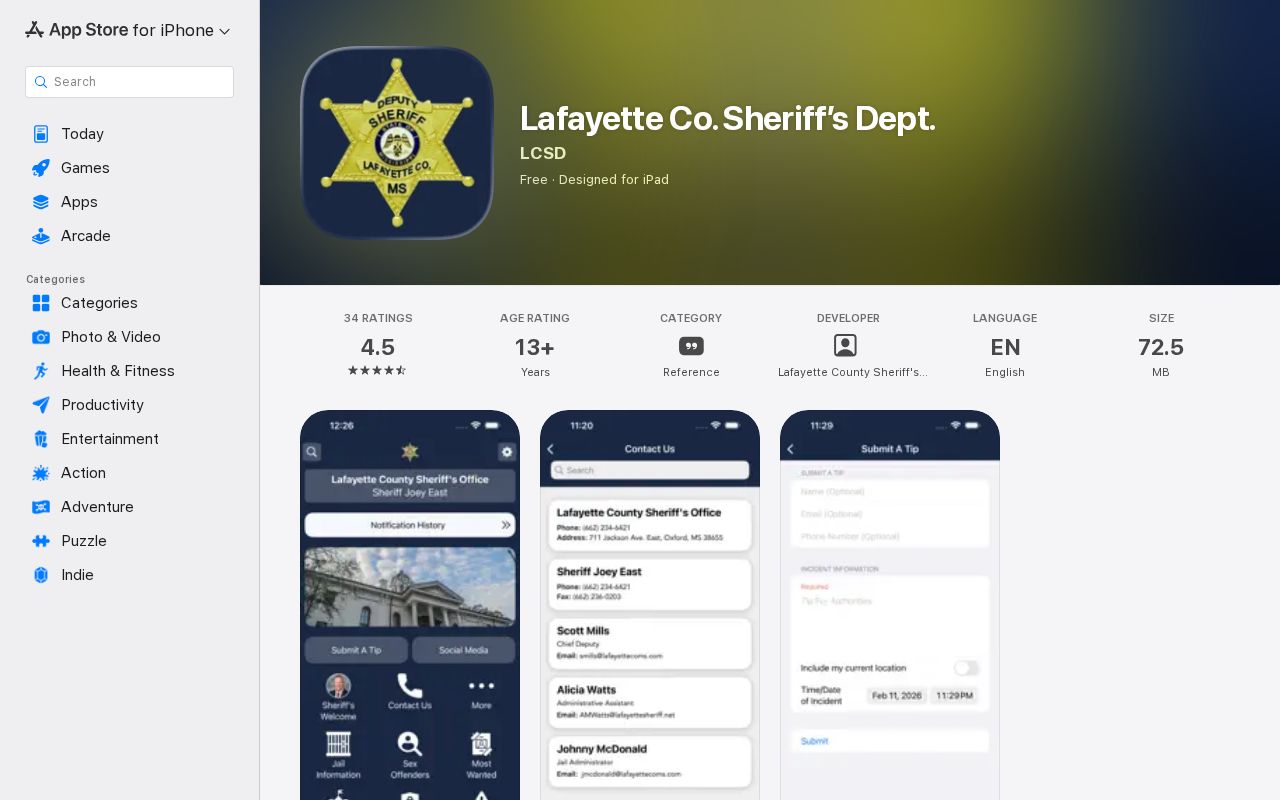
Both stores support the same cautious conclusion: use the app for listed communication features, not for an unverified Mayo record lookup.
Public Access Rules
Florida's constitutional open-government right and Florida Public Records Law, Chapter 119, govern requests to LCSO and public administrative records held for Mayo. Court files also follow judicial access rules. Access does not mean every page must be released. Confidential juvenile files, sealed or expunged records, active investigative material, protected victim details, and personal identifiers can be restricted.
Key statutes and rules:
Florida Statutes Chapter 119 gives a broad right to inspect public agency records, subject to exemptions.
Florida Statutes Chapter 943 governs the state criminal-history repository, dissemination, review, sealing, and expunction.
Florida Rule of General Practice and Judicial Administration 2.420 governs public access and confidentiality in court records.
Mayo's Compact Justice Core
Mayo became the Lafayette County seat in 1893 after the New Troy courthouse burned. That history helps explain why the town holds the county's central justice offices today. The courthouse, sheriff headquarters, and jail sit within a compact county-seat area, even though they remain separate record custodians.
The official county history recounts the move of the county seat to Mayo.
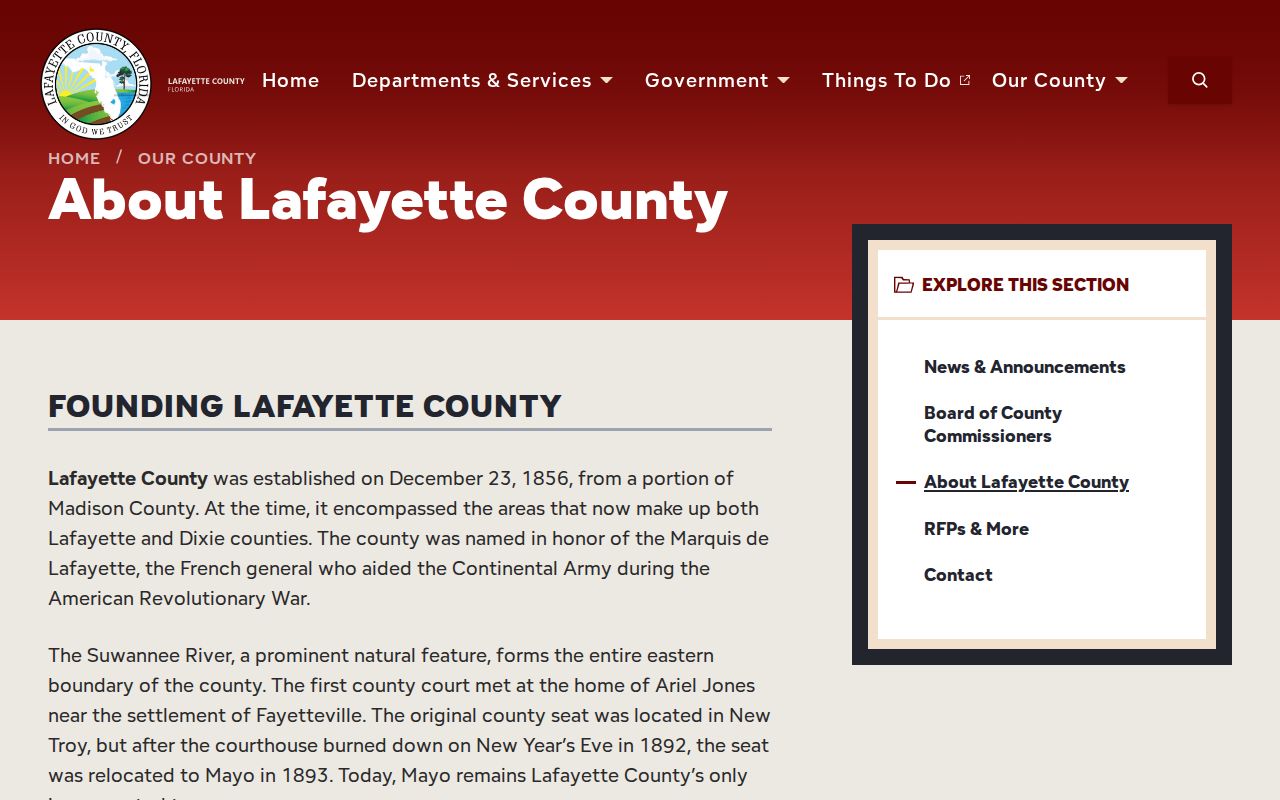
The image supplies local context for Mayo's present role without turning historical town material into a modern criminal-record claim.
Mayo Crime Data Needs Context
No current Mayo-specific crime count is stated here because Florida's transition from summary UCR reporting to NIBRS can create coverage breaks, and countywide policing may place Mayo events under LCSO rather than a nonexistent city police agency. A number without its year, reporting agency, and coverage status would mislead readers.
The FDLE crime-data program is the official place to check identified reporting periods and caveats.
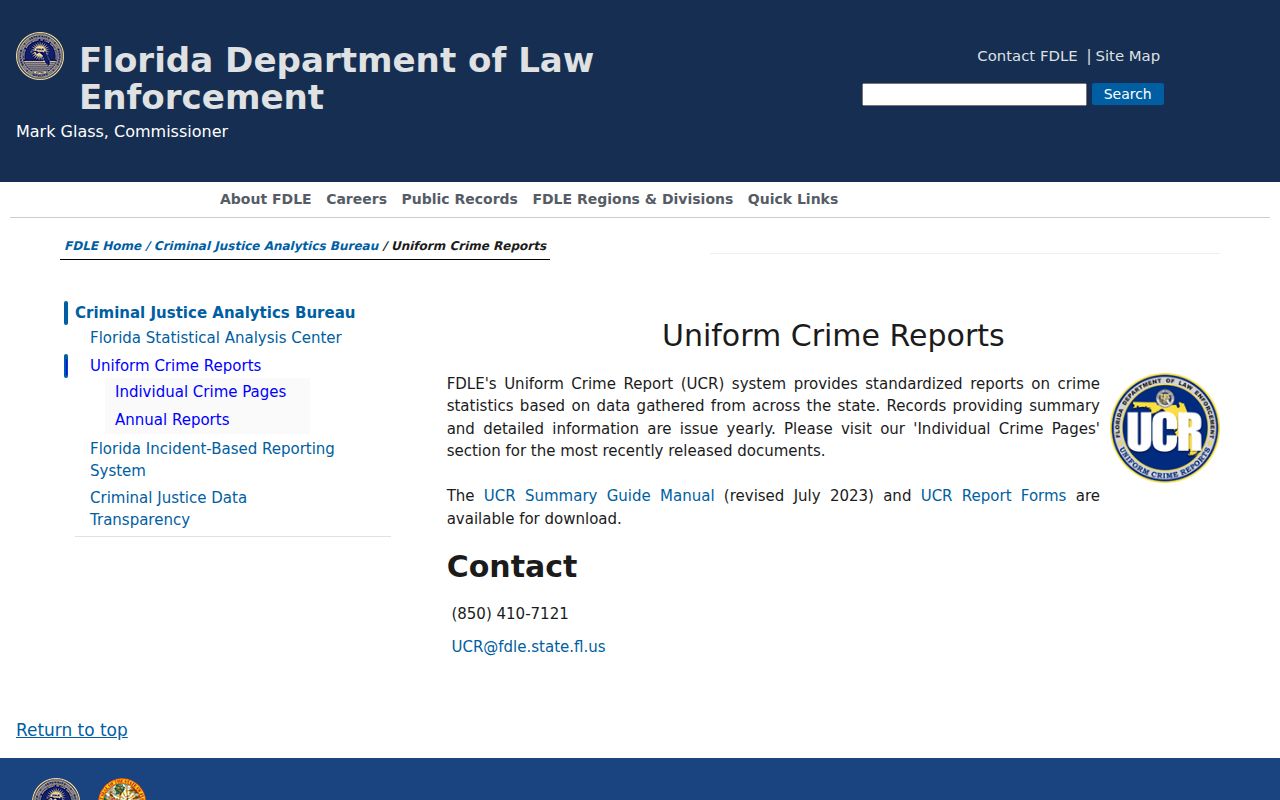
When using those figures for Mayo, confirm whether the table represents the town, all LCSO activity, or incomplete agency coverage before comparing years.
Mayo Record Channel Guide
Choose the office by the question, not by the word “record.” This prevents a town ordinance library, jail phone line, and statewide history search from being treated as interchangeable.
| Need | Mayo channel | What it provides |
|---|---|---|
| Incident report | LCSO records channels | Agency report, subject to exemptions |
| Recent arrest or jail | 386-294-4381 | Direct current-custody information |
| Filed case | Lafayette OCRS and clerk | Docket, filings, and hearings when public |
| Active warrant lead | FCIC, then LCSO | Statewide lead with local verification |
| Florida history | FDLE Instant or Personal Review | Public name result or own fingerprint review |
| State prison or supervision | FDC locator | State felony custody or supervision |
| Town ordinance | Mayo Municode | Codified law, not a criminal case file |