
Running a Sex Offender Check in Lafayette County
The Florida Sexual Offender and Predator Registry is the official starting point for Lafayette County. The Florida Department of Law Enforcement, or FDLE, maintains the statewide public system. It draws information from registrants, law enforcement, the Florida Department of Corrections, and motor-vehicle records. Lafayette County does not publish a separate local offender database. The Lafayette County Sheriff's Office instead serves as the county registration and verification contact.
Use the state search for a named person, a whole-county list, or an address-based neighborhood view. Then read the designation, status, address type, and last verification information together. A match is a registry record, not permission to confront anyone. If an address appears wrong, send the concern to FDLE or the Lafayette County Sheriff's Office so trained staff can check it.
Select Lafayette County in FDLE
A whole-county search does not require a person's name. Leave both name fields blank, choose Lafayette in the County menu, and set the offender type and status filters for the search. This route can find released registrants, people in confinement, supervised people, and records marked absconded. Those labels describe registry or custody status. They are not public risk tiers.
The official FDLE offender search form shows the exact name, place, and status controls used for Lafayette County results.
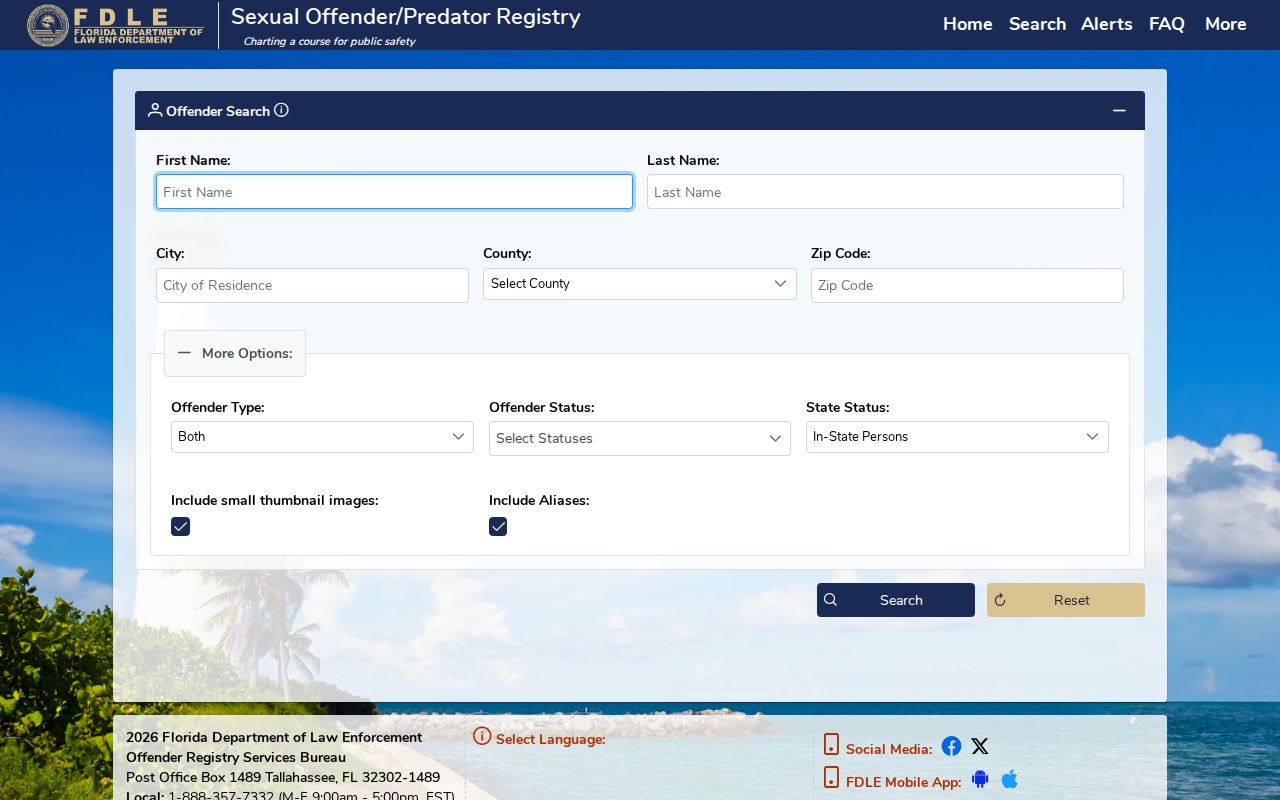
The screen helps narrow a Lafayette County list without guessing at fields or relying on a commercial people-search service.
Searching the Florida Sexual Offender and Predator Registry
Start with enough information to distinguish people with similar names. Partial names work, but broad searches can produce several records. Geography is often more useful for a Lafayette County safety check. At least one name, city, county, or ZIP field is required.
- Open the official offender search and review its conditions and definitions.
- Enter a full or partial name, or leave names blank and select Lafayette County.
- Choose offender type, status, state status, thumbnails, and aliases as needed.
- Compare the result list, then open the profile for identity, address, offense, and verification details.
| Field | Type | Required | Options |
|---|---|---|---|
| First and last name | Text | Optional | Full or partial |
| City, county, ZIP | Text or menu | One place or name | Lafayette is in the county menu |
| Offender type | Choice | Optional | Offender, predator, or both |
| Offender status | Multiselect | Optional | Absconded, confined, released, supervised, and other states |
| State status | Choice | Optional | In-state, out-of-state, or both |
| Images and aliases | Checkbox | Optional | Add thumbnails or alias matches |
Lafayette Neighborhood Map Limits
The neighborhood search accepts an address, city, ZIP, state, result type, and radius. Available distances run from one-quarter mile through five miles. Map view gives a quick picture around a Lafayette County address. List view gives a more complete text set. Use both. A transient registrant or an address the system cannot geocode may lack a conventional map pin yet remain in list results.
Map symbols distinguish transient offenders, transient predators, sexual offenders, and sexual predators. They do not show a live location or predict conduct. Registry addresses come from reporting and verification, so read each display with its dates and status.
What a Registry Profile Shows
A profile joins identity details, legal designation, registered locations, offense information, and compliance status. Some collected data may not appear on every flyer. Never fill a blank field by inference. Victim names are not published, though a profile may state whether the victim category was adult or minor.
| Name and aliases | Current name and released alternate names. |
|---|---|
| Photo and description | Photo, age, physical details, and recorded marks or tattoos. |
| Registered location | Permanent, temporary, or transient address, mapped when possible. |
| Offense record | Jurisdiction, date, statute or description, circumstances, and victim age category without a name. |
| Other reported data | Occupation, business location, vehicle, telephone, email, or internet identifiers when public and present. |
| Registration status | Released, absconded, confined, or supervised by a named authority. |
Read Lafayette Status Labels Carefully
“Absconded” means a person is no longer at the last reported address. “Confinement” can include jail, state prison, federal custody, or immigration custody. “Released subject to registration” means the duty continues outside confinement. Supervised filters name FDC, the Department of Juvenile Justice, or U.S. Probation. State Status separates Florida and out-of-state records.
These filters organize Lafayette County results. They do not rank future danger. Compare the filter with the profile's dates and supervising authority. Report a suspected mismatch rather than circulating a screen capture with added claims.
Registration Requirements and Levels in Florida
Florida does not display SORNA Tier I, II, or III as its public classification system. It uses “sexual offender” and court-designated “sexual predator.” Both designations generally require lifetime registration. An eligible offender may ask a court for relief after at least 25 sanction-free years without a felony or misdemeanor arrest, but exclusions and judicial discretion apply. Predators generally remain registered for life unless a qualifying pardon or postconviction set-aside applies.
| Florida designation | General duration | Verification and visibility |
|---|---|---|
| Sexual offender | Generally lifetime; limited petition route may apply after 25 qualifying years | Public registry; schedule depends on governing requirements |
| Sexual predator | Generally lifetime, with narrow relief routes | Public registry; address verified at least quarterly |
| No public tier label | Not applicable | FDLE status filters are not risk levels |
Registrants generally report to the county sheriff within 48 hours and then complete required identification action with the driver-license agency within 48 hours. Call the Lafayette County sheriff for procedure because no separate registry-desk schedule is published.
Lafayette Address and Move Alerts
Florida Offender Alert adds notice to a point-in-time registry search. A user may follow a selected registrant's move anywhere in Florida or set a distance around an address for notice when a registrant moves within that area.
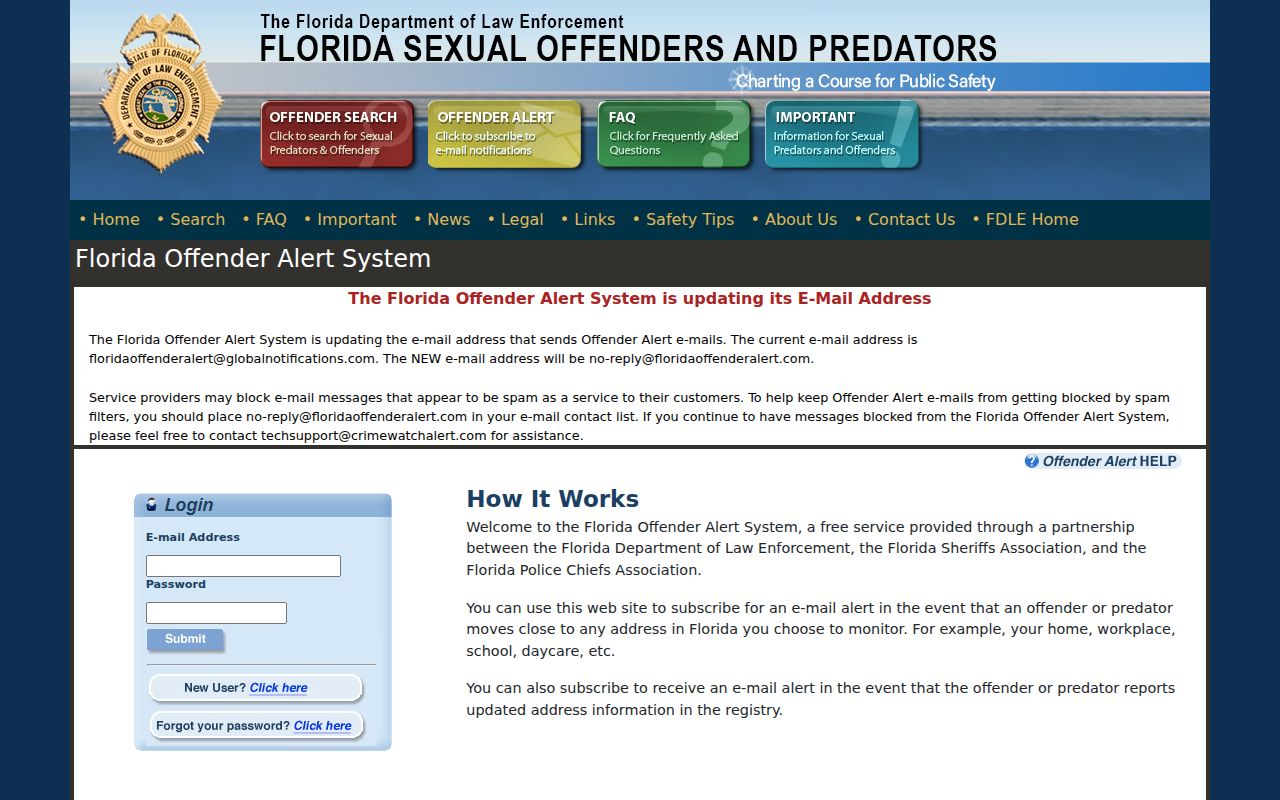
For a Lafayette County household, an alert can reduce repeated searches, though the official profile still supplies needed context.
For another state, use the National Sex Offender Public Website. State rules differ, so a blank Florida result does not settle another jurisdiction's status.
Lafayette Sheriff Verification
The Lafayette County Sheriff's Office is the local registration contact. Call 386-294-1222 before visiting because no dedicated offender-desk hours or appointment page is posted. The office can receive a local address concern. FDLE also accepts suspected registry errors at 1-888-357-7332 or sexpred@fdle.state.fl.us.
Immediate danger belongs with 911. An ordinary address question does not. Give the agency the profile, location, and exact issue instead of confronting a registrant or household. Staff can determine whether it is a reporting lag, map issue, or compliance matter.
Personal Review Is Different
The registry is not a general criminal-history product. FDLE's free fingerprint Personal Review is for a person who wants to inspect and challenge their own Florida criminal history. It requires fingerprints from a law-enforcement or criminal-justice agency and a mailed form. It does not replace a Lafayette County registry search for community awareness.
FDLE explains that process on its Personal Review page.
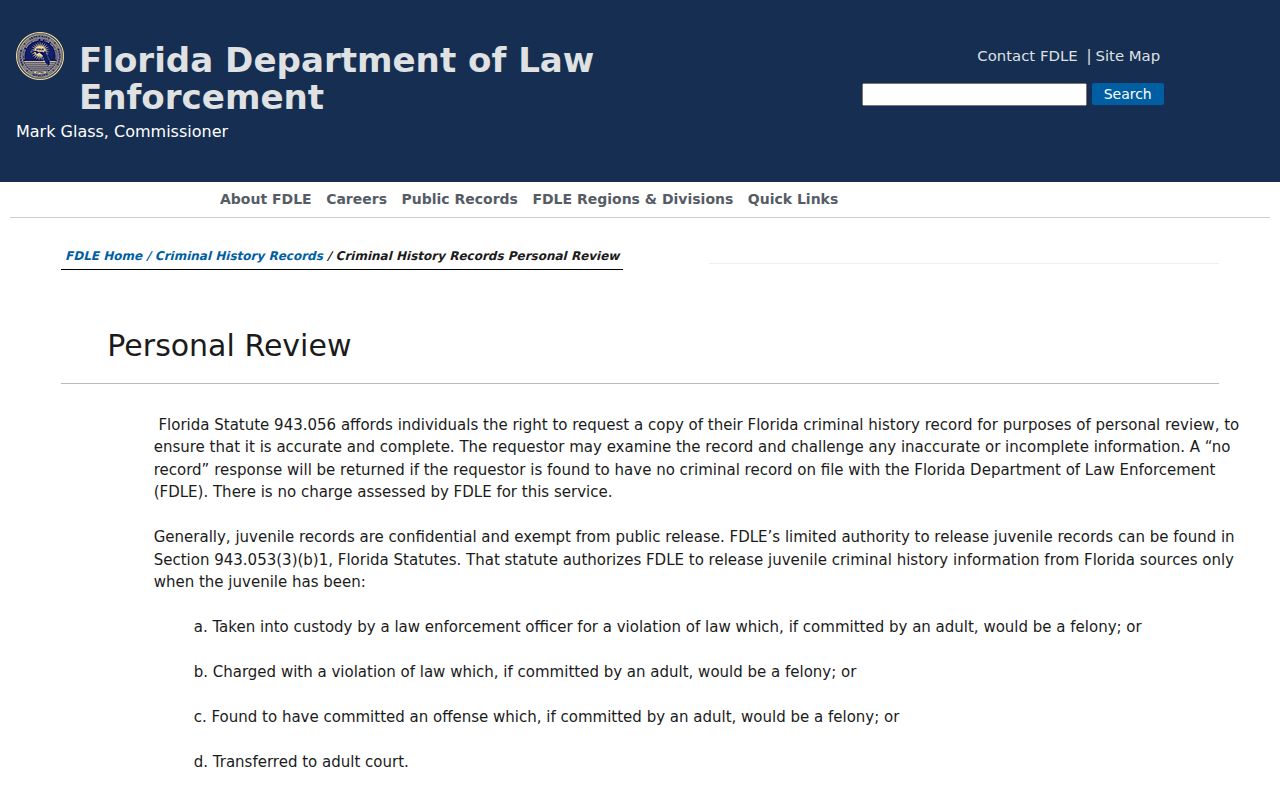
The distinction keeps a registry profile, a name-based history, and a fingerprint review from being mistaken for one record.
Lawful Use and Community Notification
The registry supports personal, family, and neighborhood awareness. Florida law also sets limits. Section 775.215 imposes a 1,000-foot residence restriction for specified convictions, but the rule does not apply to every profile in the same way and local provisions may differ.
Do not misuse registry data: Under Florida Statutes section 775.21, materially altering registry information or knowingly publishing false information as a public record can be a first-degree misdemeanor. Never harass, threaten, intimidate, or take action against a listed person or household.
Use a Lafayette County profile as an official information source, not an invitation to vigilantism. Report suspected errors to FDLE or LCSO so the responsible agency can correct or enforce the record.